SOT (Sound on Tape)
one of the most overlooked tools for immersive storytelling

Ask someone what the most important aspect of a film or video is and the usual answer is, duh, the beautiful cinematics (this has gotta be one of those answers in the question, right?). But what most people overlook is the importance of sound. And the fact that it is actually far more important in terms of audience engagement and retention than the visuals are.
Going beyond the baseline of acceptable audio quality (i.e. interviews captured with an external microphone, preferably via XLR), sound is a lot more than just being able to understand soundbites. It’s more like a layered cake, much of which is subtle and hidden inside by the maker.
“Hearing is believing. Sound is what truly convinces the mind is in a place.”
-Jesse Schell, a video game designer and CEO of Schell Games (maker of engaging games like Among Us 3D and Daniel Tiger’s Stop & Go Potty)
So how do we get there? Just like how every great vacation starts with a spreadsheet (and usually I’m the one making it), every great video utilizes a paper edit/script. It’s a place for creators to collaborate as contributors to a larger story and work through ideas and soundbites.
A favorite format is 2 columns: “video” and “audio.” Then we begin to compartmentalize a mountain of raw footage and form it into a story.
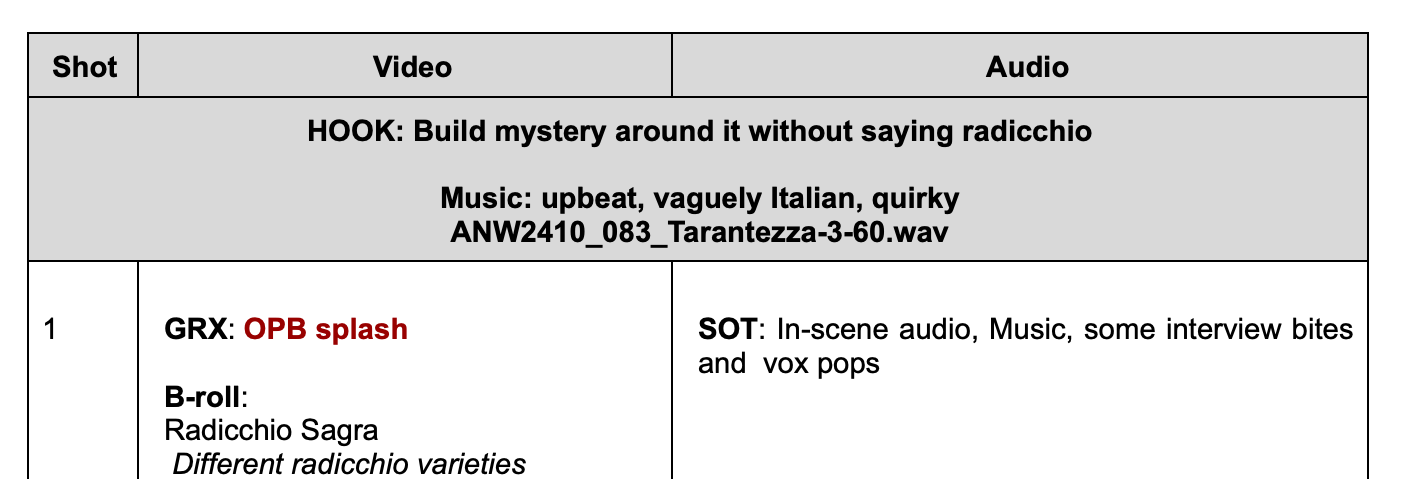
One term that I have loved and learn to use more is “SOT,” which I innately understood the meaning of but had to google the exact words it stands for: Sound on Tape. Executive Producers at OPB introduced me to this industry lingo, which even though I’m well into my career, “SOT” was to me, a bit of an old school turn of phrase from the era of magnetic tape recordings and cutting media with scissors. And like most ideas from a bygone era, rather poetic in its modern day continuance.
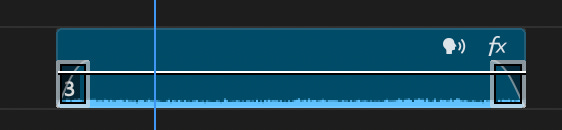
For example, a best practice is recording “room tone” at the end of every interview. The interviewee sits on their stool, calmly in a listening silence for what seems like an eternally long 10 seconds. A moment of pure auditory reflection. A moment of necessity. You can imagine what a godsend it is for an editor to be gifted room tone. And what a rare thing it really is to sit in silence, in the company of others, while making a piece of work together.
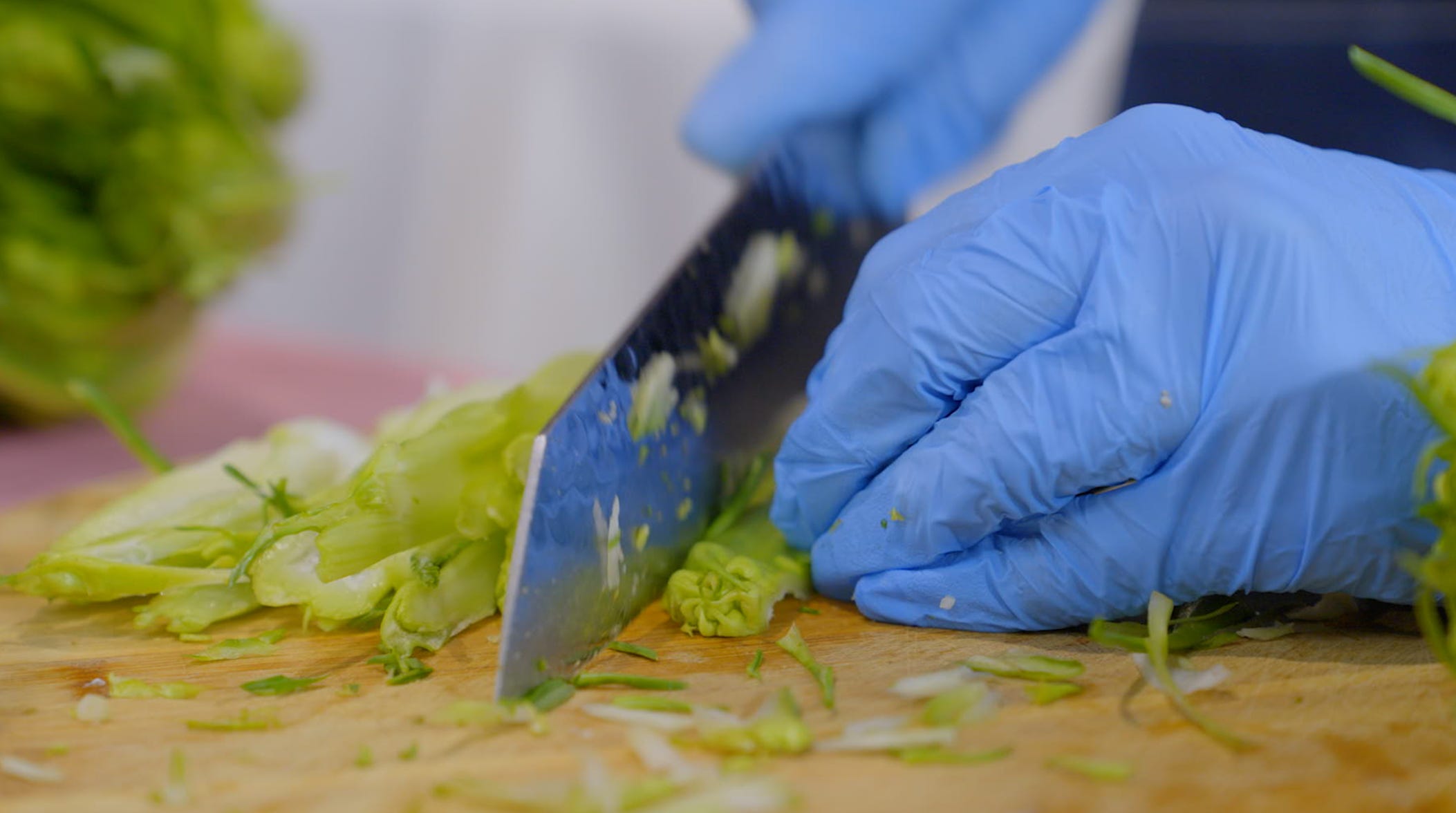
But room tone isn’t even what most of us think of as SOT: it’s breezes blowing through trees, a knife chopping through crispy stalks, the sizzling of a frying pan, or a crowd in a large room enjoying a festival about a vegetable. It dips the audience into a micro-story within the main arc. And in many ways, it underpins the entire story by fully immersing in a specific place in time.
SOT can be both a passive form of storytelling, quite literally, as it is not words being spoken; or active, when it takes the shape of bangs, booms, or zooms. It can be true from a moment, it can be taken of out context and moved around, or it can be entirely manufactured (which is technically not SOT, it’s foley!). And in most ways, it’s one of the most powerful ways to make any story even better.
Which, the exception to this rule would be the unintentional addition of noise to the piece. SOT is an intentional move. It’s blended between soundbites and music. It’s not there by accident, unless the editor didn’t have the experience working with audio in depth to know that SOT should always add to the piece, and not detract from hearing the more important aspects of the audio like someone speaking. In that case, there are probably a whole host of other audio issues involving panning, hard cuts, lack of crossfades, etc.
The other benefit to SOT is its power to transition. Upnotes at the end of the sentence (alright, you caught me, I made the sentence end there) be damned! I’ve never experienced such joy from using a chopping knife SOT to quite literally chop clips together…and then carefully shave off the tips with some crossfades, underneath. SOT has the power to take you from one thought (even a trailing one) immediately into the next.
Chop. Chop. Chop.